
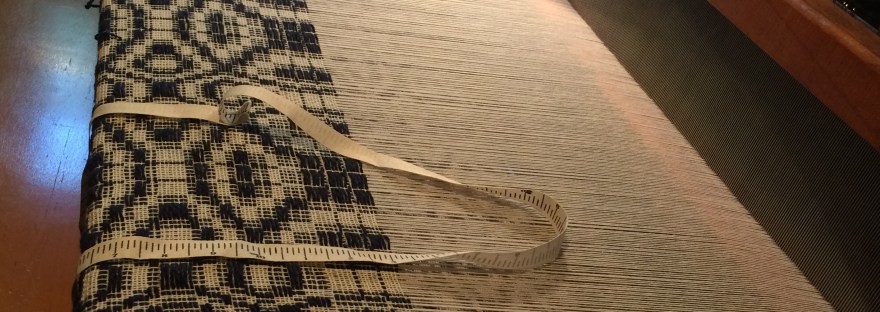
I just finished weaving a bunch of sweet dishtowels. They need hems and a good wash/dry before they are ready for their close-up but I’ll post them soon. It’s nice to be back at the big loom again.
As I woven off the last towel, I was listening to the album Two Hands by Leon Fleisher, one of my favorites. In 2016, I actually had the privilege to see him in concert (he played “Sheep May Safely Graze” and I thought I’d explode from happiness). I’ve been an admirer since my husband was a student at the Peabody where Fleisher taught for many years. If you don’t know the story, Fleisher was a child prodigy, playing with the New York Phil at only age 16. He was called “the pianistic find of the century”. Then at age 36, he suddenly and mysteriously lost the use of his right hand. For the next 40 years, he played the repertoire for left-hand only while searching for an explanation and a treatment. In 2004, some new experimental injections lead to regaining the use of his hand and he released the album.
I was immediately taken with it because at the time, my husband was still striving through graduate school and his doctorate. There were times when I really didn’t think we’d make it and when I didn’t know what the other side would even look like if we did make it. Fleisher’s album was so beautiful and so hopeful that I would turn to it for reassurance that one could persevere.
But let me be clear what the album means to me. It isn’t about hanging in there until you finally get what you want, it’s about hanging in there even when you don’t think you’ll ever get it. It’s continuing on even with loss. We live in a world of loss and getting older is defined by it. When the album was released and everyone was so amazed that he could play with both hands again, I just remember thinking, “it is wonderful, but it’s not like he hasn’t always been a pianist.” In a way, it hadn’t really changed anything about how I saw him. The profound part of the story to me isn’t the album with two hands, it’s the 40 years with one; it’s that he continued to do what he loved even if he didn’t actually “fit” the definition of that activity. It didn’t stop him from being what he wanted to be.
I use two hands to weave and like piano it might seem like a necessity. But as I wove and listened to Fleisher play, I knew it wasn’t my hands that make me a weaver and if tomorrow I were to loose the use of them, I’d still be a weaver. My love of doing fiber and the friends and community it has created in my life wouldn’t go away. Some day, even without some traumatic event, I won’t be able to weave any more. I’ve noticed my hands starting to look old and feeling achey way more often than I want to admit. Beethoven wrote music long after he could hear it, Fleisher played piano for years with only one hand, and I will dream color and texture and pattern long after my hands won’t be able to do it. I will still be a weaver.


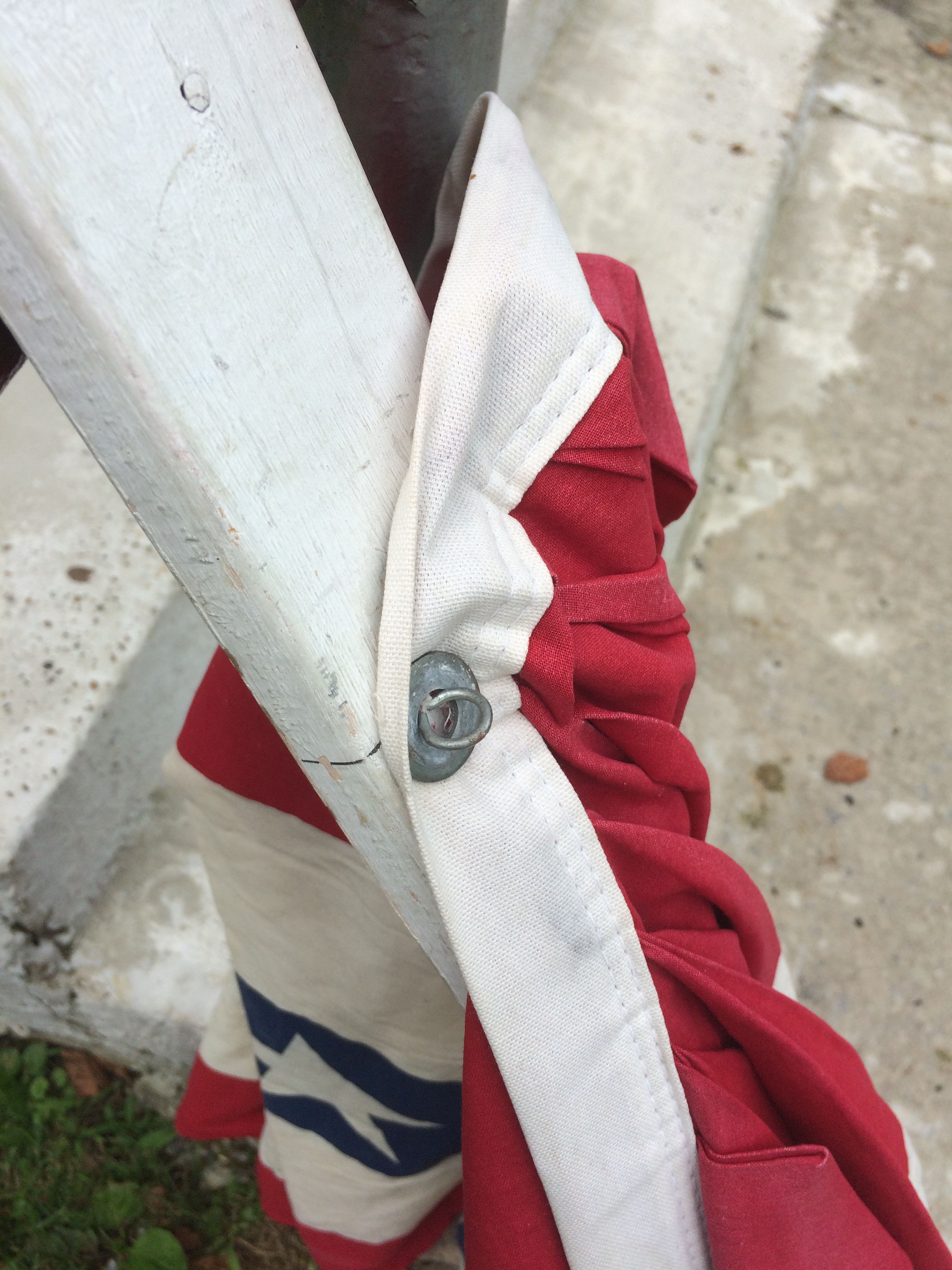 I know it’s silly, but I was so moved by that little washer! I loved seeing the handwriting of whoever had labeled that frame and that bunting as both belonging to the “up creek, back town hall” (only in a town this size could you indicate which side of the building by referencing the little creek that runs through town:) because without those labels, it wouldn’t have worked. On an incredibly hot day, when extra work was the last thing I needed, I was so appreciative of their amazing system. Everything they did was always so precise. That little washer was a tangible mark of the folks who came before, their whole story and the legacy of what they have left for me and this town. It isn’t even something that will show. Their legacy is in the small, unseen details that make everything work. I’m thankful to them that they cared about me and this town – that they wanted to celebrate the ideals that this country tries (and often fails) to live up to – that despite challenges and obstacles and imperfections, they kept going forward. Some of these folks are still in town but aren’t doing well, some I see and hug on a regular basis, and some have passed away; I could list all their names here to honor them but I think, for me, that perfectly placed little washer in the absence of a missing grommet says it all.
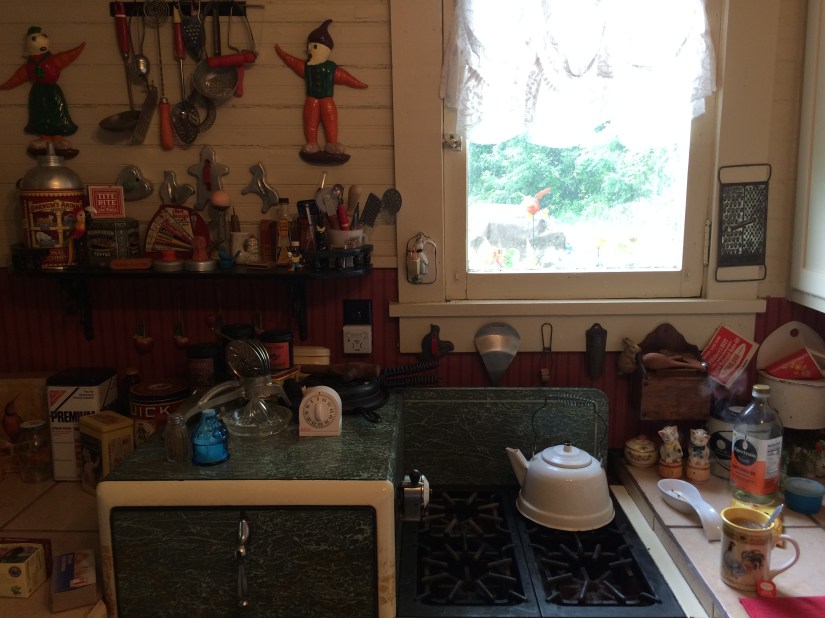 You can’t quite see it but out of that flower box clad window is a cellar house and on it is a little bird house where a tiny wren builds a nest every summer. As I make my morning tea, it is usually perched on top of the box singing its happy, sweet, “this is my place” song (and sometimes, more forcefully, fighting off starlings twice its size that somehow think they could get through the tiny little hole to the nest!). The little wren’s joy (and ferocity) really resonate with me. We’ve come here every summer for four years now and it is a disruption, a happy disruption, but a disruption. It comes at a cost of leaving our house and sweet friends to be here; it takes some work on our part to fulfill our responsibilities from here (and on my aunt and uncle’s part who do so much work to give us a home in the farm house each year); I guess it asks a little ferocity of will. But most mornings I just want to join the little wren and sing from the rooftops my joy at being so blessed to be here. We do it freely by design and the benefits and rewards far outweigh the disruption.



 jeekeehoo